Manuka honey is a type of active, healing honey that comes from New Zealand. You may have heard of Manuka honey before – most people are aware of it – and some can be put off by the price.
But Manuka honey isn’t an average honey that you might buy for a few Euros in the supermarket. Manuka has unique health benefits and the bees that produce it don’t have it easy, so it definitely earns its price tag! Here’s why…
Here’s 11 Facts on Manuka Honey
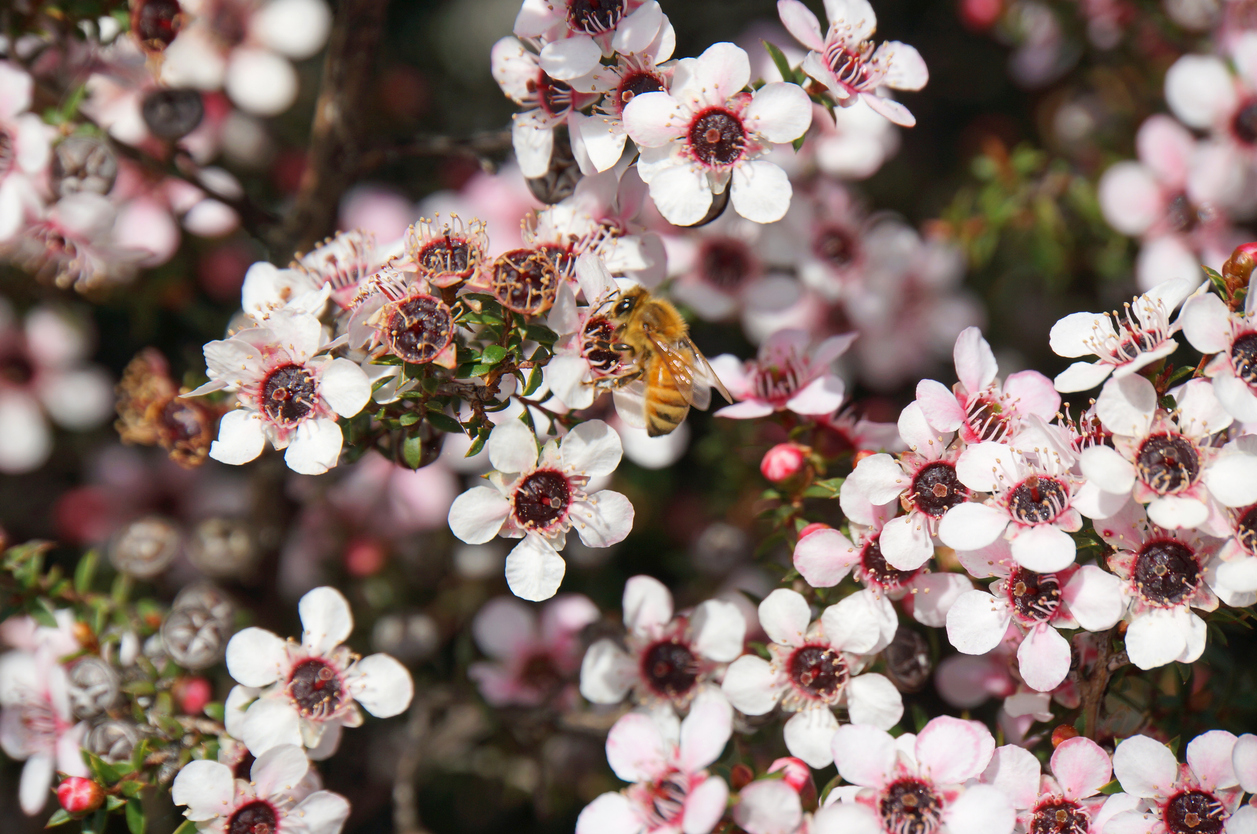
- Manuka honey is produced by bees foraging for nectar on the Manuka bush that’s native to New Zealand. The Manuka bush is hardy but fairly choosy about where it grows, preferring cool to mild temperatures, good air flow and moderate humidity. It also needs a slightly acidic, sandy soil with very good drainage.
- The Manuka bush is part of the tea tree family, and only flowers for four to six weeks each year. This means that local bees only have four to six weeks each year to forage for nectar, making Manuka honey very rare.
- Bee hives housing bees that feast on nectar from the Manuka bush are often located in remote, wild areas. So not only do the bees have to work hard in the window of opportunity the short flowering season provides, beekeepers also need to travel far and wide to collect and harvest Manuka honey.
- Manuka bushes are as good for the planet as they are for supplying us with delicious Manuka honey. They help to prevent soil erosion and incredibly, can be one of the first new flora to sprout through ground ravaged by wildfires. The Manuka bush is also home to a wide variety of birds, insects and small mammals.
- Genuine, high quality Manuka honey, like ours here at Necta & Hive, can only come from New Zealand (and some parts of Australia) – anything else isn’t the real deal!
- It’s estimated that around half of the honey sold around the world that’s labelled as Manuka, is actually fake or has been mixed with some other honey or sugar syrup and sold to unsuspecting consumers. (If a Manuka honey is too cheap to be true, it probably isn’t Manuka.)
- Real Manuka honey must state that it originates from New Zealand or Australia.
- Manuka honey is naturally antibacterial due to a unique compound called methylglyoxal, or MGO. MGO isn’t found in regular honey, and each Manuka honey has an MGO rating, the higher the number, the more potent the antibacterial properties.
- Each batch of Manuka honey has to undergo rigorous laboratory testing to verify its potency (MGO rating) and authenticity.
- Due to its natural antimicrobial activity, Manuka honey can be used to promote wound healing, including the healing of diabetic foot and leg ulcers, and to help soothe a sore, irritated throat. It may also be useful for supporting skin that’s prone to acne breakouts.
- Manuka honey is a rich, dark amber colour with a distinct almost medicinal aroma and a slightly nutty, caramel-sauce flavour. It’s best used sparingly, either drizzled over muesli, added to a breakfast smoothie or stirred into a warm (not hot) herbal tea.